
THE PULSE (Deep Dive)
- Barbara Diniz
- Mar 1
- 3 min read

Barbara Diniz
The Pulse is a focused body of work exploring the inner states of the human soul made visible through form and color. This collection examines emotional tension, resistance, and movement within the figure. It emerged from a clear intention to represent psychological states related to our relationship with God.
The guiding question was simple: how can a figure express vulnerability and rebellion without becoming literal? In The Pulse, I approached this by observing how posture, gesture, and chromatic intensity could communicate internal dynamics.
In each piece, the figure exists within a field of color that shapes and influences the movement of the form. The color fields are not background surfaces. They are active, structural elements that provide tension and context. For example, red is used in this series not because it is dramatic, but because it functions structurally. Red represents love. It can represent romantic love, but it also represents the blood of Jesus. Blood is sacrifice. Blood is covenant. Blood is life. Red therefore carries intensity and seriousness. It cannot be used lightly. When red enters a painting, it introduces gravity. Red can also represent reason, which opposes faith.

In my collection The Pulse, red represents the blood of Jesus and therefore love and life. In the four Gospels, Jesus is revealed as the Messiah through the Holy Spirit. I decided to represent this through the square or rectangle that forms the frame or foundation of the art pieces in this collection. To oppose that, I used Payne's grey to represent darkness and distance from God.
In early studies, I worked with the colors alone, testing brand and color variations, then saturation and proportion. Once I completed these studies and the creative process was flowing, I began testing with human figures. Because I wanted to focus on the human race, the old creature, and not the church, I used only male dancers as references. Having a cousin who is a dancer also helped a lot.

My collections are intentional messages. I usually begin with the message, then move to color, and then to shape.
Each painting in The Pulse has its own context and intention. For instance, The Mask, which is the first painting of the series, confronts resistance and pride.
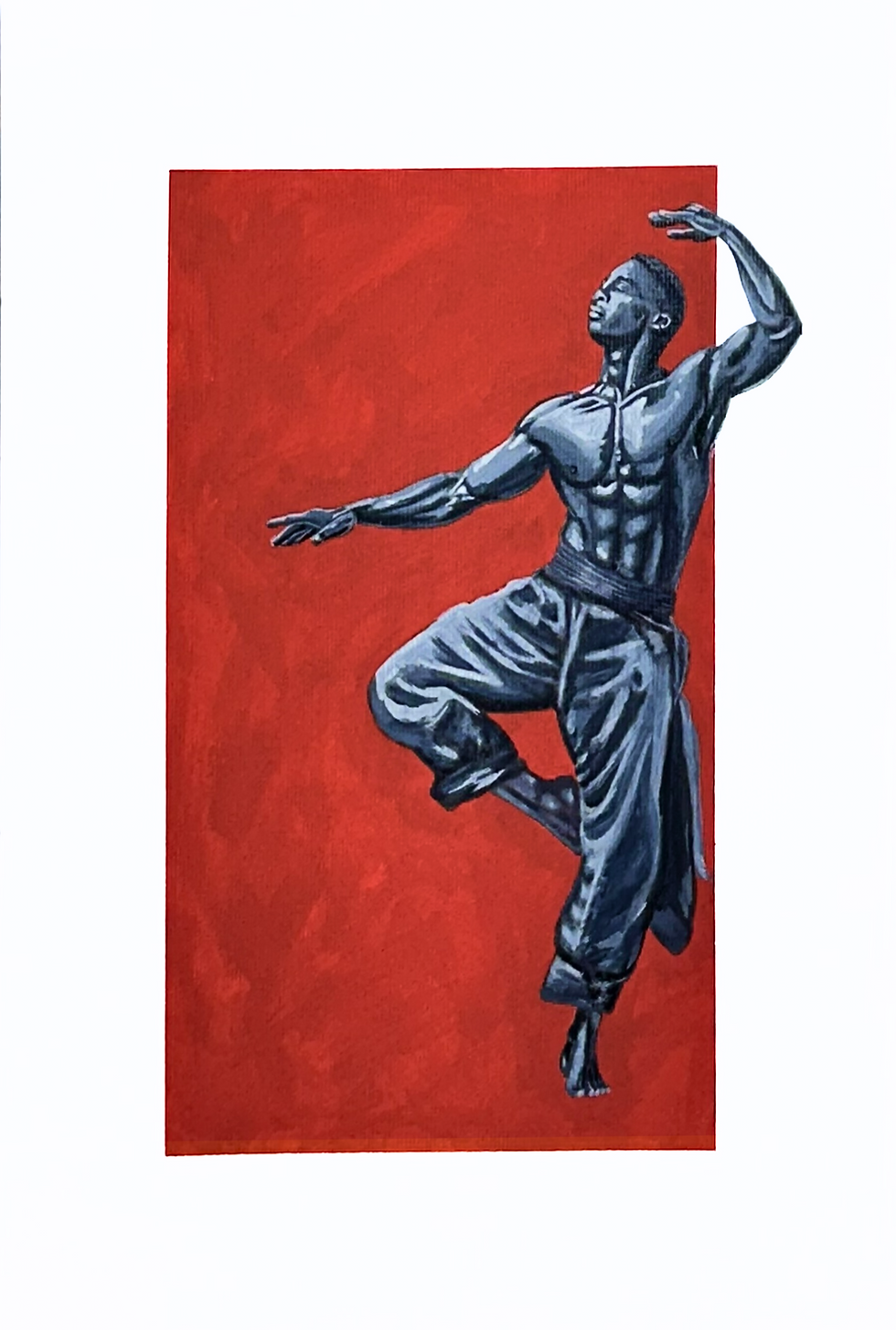
Proverbs 16:18 — “Pride goes before destruction, and a haughty spirit before a fall."
Matthew 23:12 — “For those who exalt themselves will be humbled, and those who humble themselves will be exalted.”
The pose shows an elevated chin and represents composure, control, and self-sufficiency. The dancer's body is painted in grayscale, depicting the coldness of stone and referencing the verses:

Ezekiel 36:26: "I will give you a new heart and put a new spirit in you; I will remove from you your heart of stone and give you a heart of flesh."
Ezekiel 11:19: "I will give them one heart and put a new spirit in them; I will remove from them their heart of stone and give them a heart of flesh."
Across the series, repetition and variation were essential. The colors are repeated, and so are the grayscale male dancers, each recording a different posture and representing different internal states. They present a condition.
The Pulse is an attempt to make visible conditions that are rarely visible. The figures are gestures. The color fields are structures. Together, they form a visual representation of internal spiritual states.
To explore each piece and read the individual descriptions on the site, visit the Pulse collection page here:https://www.barbaradiniz.com/pulse


Comments